
How much kibble should you give your dog each day? There is no single amount that works for every dog. The right ration depends on the dog, its lifestyle and the formula used.
1. The main factors to consider
To work out the right amount, you need to look at the dog’s weight, age, activity level, build, body condition, neutering status and the energy density of the kibble.
2. The kibble’s energy changes the ration
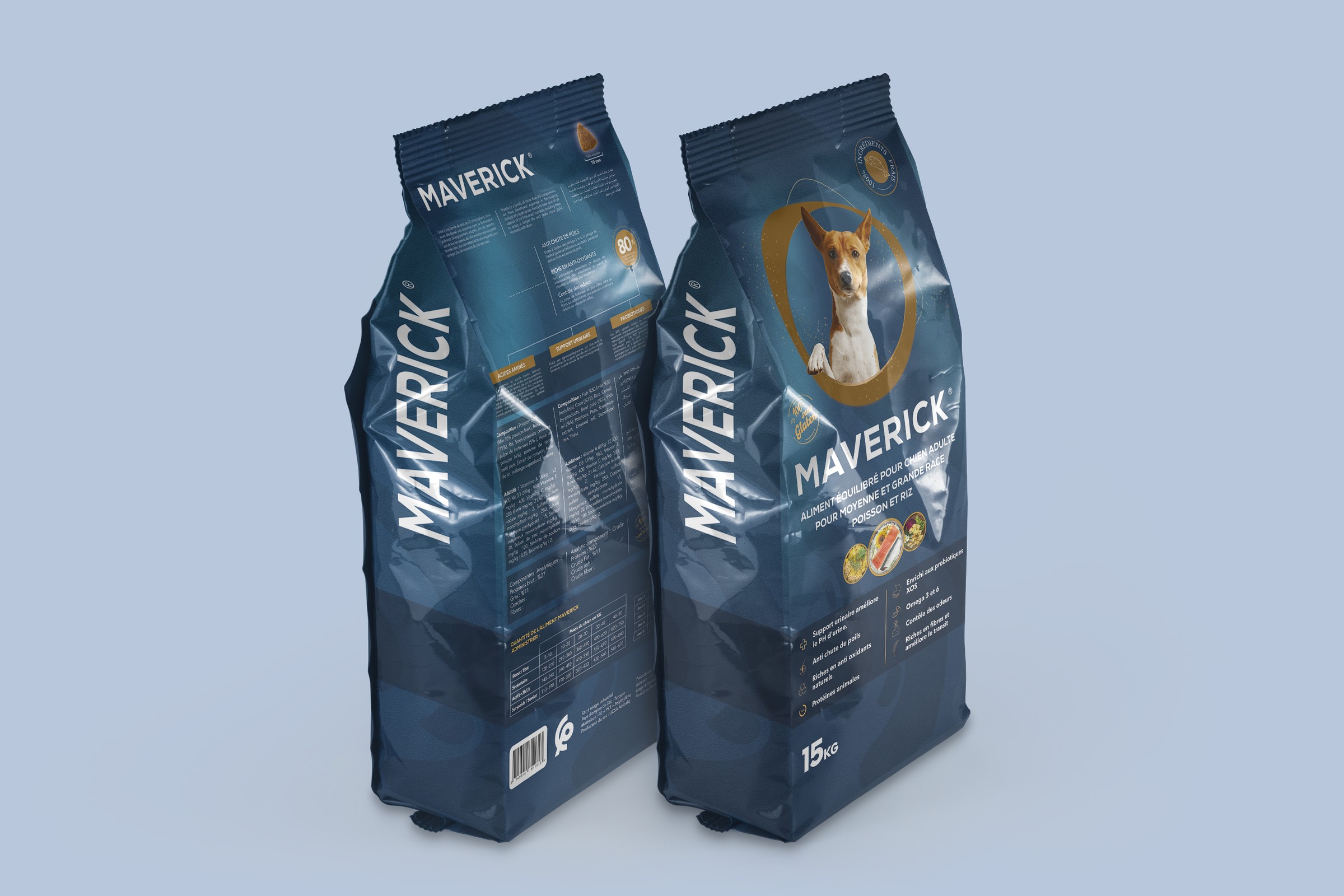
Not all kibbles provide the same amount of energy. A more energy-dense kibble often calls for a smaller ration. Maverick provides a metabolisable energy of about 3,400 kcal/kg.
3. Watch your dog’s body condition
The ration shouldn’t be set once and for all. The ribs should be easy to feel without being too visible, the waist should be slightly defined when seen from above, and the weight should stay stable.
4. Adapt the ration to activity
A less active dog will need a more moderate ration. A normally active dog can follow the starting recommendations. A very active dog may need a slightly larger ration, depending on how its weight and body condition evolve.
5. Kibble size matters too
Kibble size affects how the dog picks it up, how it chews and how comfortable the meal is. Maverick uses a triangular kibble of about 10 mm, designed for medium and large breed adult dogs.
6. Good everyday habits
- Use a measuring cup or a scale.
- Serve the ration in one or two meals.
- Avoid filling the bowl “by eye”.
- Limit treats.
- Check the weight every month.
In short
- The right ration depends on weight, activity and body condition.
- The kibble’s energy directly affects the amount to give.
- A kibble suited to the dog’s size makes eating easier.
The right ration isn’t just an amount. It’s a balance between nutrition, activity and daily observation.